Vehicle Safety Inspection Checklist | What to Check for a Safer Car
Vehicle Safety Inspection Checklist: What to Check for a Safer Car
A general vehicle safety inspection is one of the simplest ways to keep your car reliable and safe on the road. Many issues don’t appear suddenly — they build up slowly over time. A basic inspection helps catch small problems before they become expensive repairs or safety risks.
You don’t need to be a mechanic to understand the basics. Knowing what to check and when can make a real difference.
Why Regular Vehicle Inspections Matter
Even when a car feels “fine,” wear and tear is always happening in the background. Regular inspections help reduce breakdowns, improve safety, and extend the life of your vehicle.
A proper inspection can help:
- Prevent unexpected failures
- Improve driving safety
- Maintain vehicle performance
- Give peace of mind, especially for families
Skipping inspections often leads to last-minute problems that could have been avoided.
Basic Vehicle Safety Inspection Checklist
Here are some of the most important areas that should be checked regularly. This isn’t about selling services — it’s about keeping your car safe.
Lights and Signals
Working lights are essential, especially at night or in bad weather.
Check:
- Headlights (low and high beam)
- Brake lights
- Turn signals
- Hazard lights
A burned-out bulb is easy to fix, but dangerous if ignored.
Tires and Tire Pressure
Tires affect handling, braking, and fuel efficiency.
Look for:
- Uneven tread wear
- Low tire pressure
- Cracks or bulges
- Proper inflation (including the spare)
Incorrect tire pressure can seriously affect vehicle control.
Brakes
Brakes should never be ignored.
Pay attention to:
- Squeaking or grinding noises
- Vibrations when braking
- Longer stopping distances
If something feels off, it usually is. Brakes are a safety priority, not a “later” repair.
Engine Oil and Fluids
Fluids keep your vehicle running smoothly.
Check:
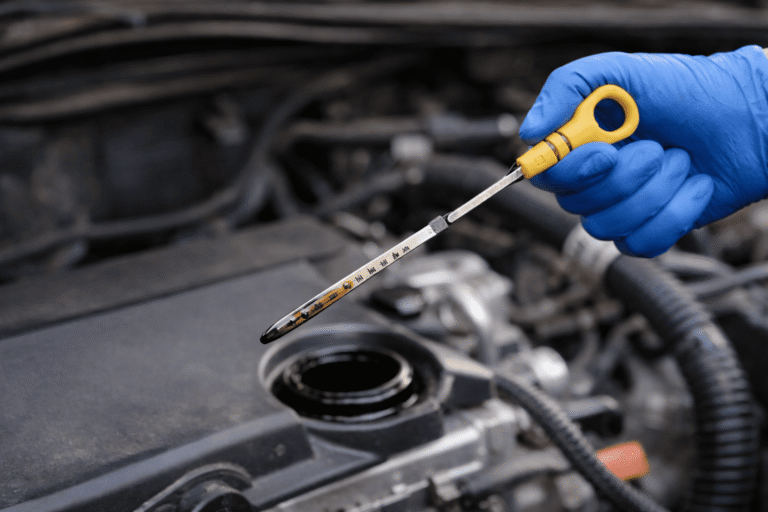
- Engine oil level and color
- Coolant level
- Brake fluid
- Windshield washer fluid
Dirty or low oil can cause engine damage faster than many people realize.
Battery and Electrical System
Battery issues often appear without warning.
Watch for:
- Slow engine starts
- Dashboard warning lights
- Corrosion on battery terminals
A weak battery can leave you stranded at the worst moment.
Windshield, Wipers, and Mirrors
Visibility is part of safety too.
Inspect:
- Cracked or damaged windshield
- Wiper blade condition
- Proper mirror alignment
Worn wipers in rain can be more dangerous than you think.
Preventive Maintenance and Vehicle Safety
A complete safety inspection often leads to preventive maintenance tasks such as oil changes, battery checks, and brake inspections. These aren’t emergency repairs — they’re small actions that help prevent bigger problems later.
Regular oil changes protect the engine, battery checks reduce the risk of sudden failure, and brake inspections ensure your vehicle can stop safely when needed. It’s not about doing everything at once, but about staying ahead.
How Often Should You Inspect Your Vehicle?
There’s no single rule for everyone, but general recommendations include:
- Before long trips
- At least once or twice a year
- When warning lights appear
- If something feels different while driving
If you’re unsure, it’s better to check than to guess.
Final Thoughts
Your car is part of your daily life. It gets you to work, carries your family, and helps you move safely from place to place. Regular vehicle inspections are a simple habit that can prevent stress, save money, and avoid dangerous situations.
Sometimes it’s the small things that make the biggest difference, even if they don’t seem urgent at first!.